Facilities
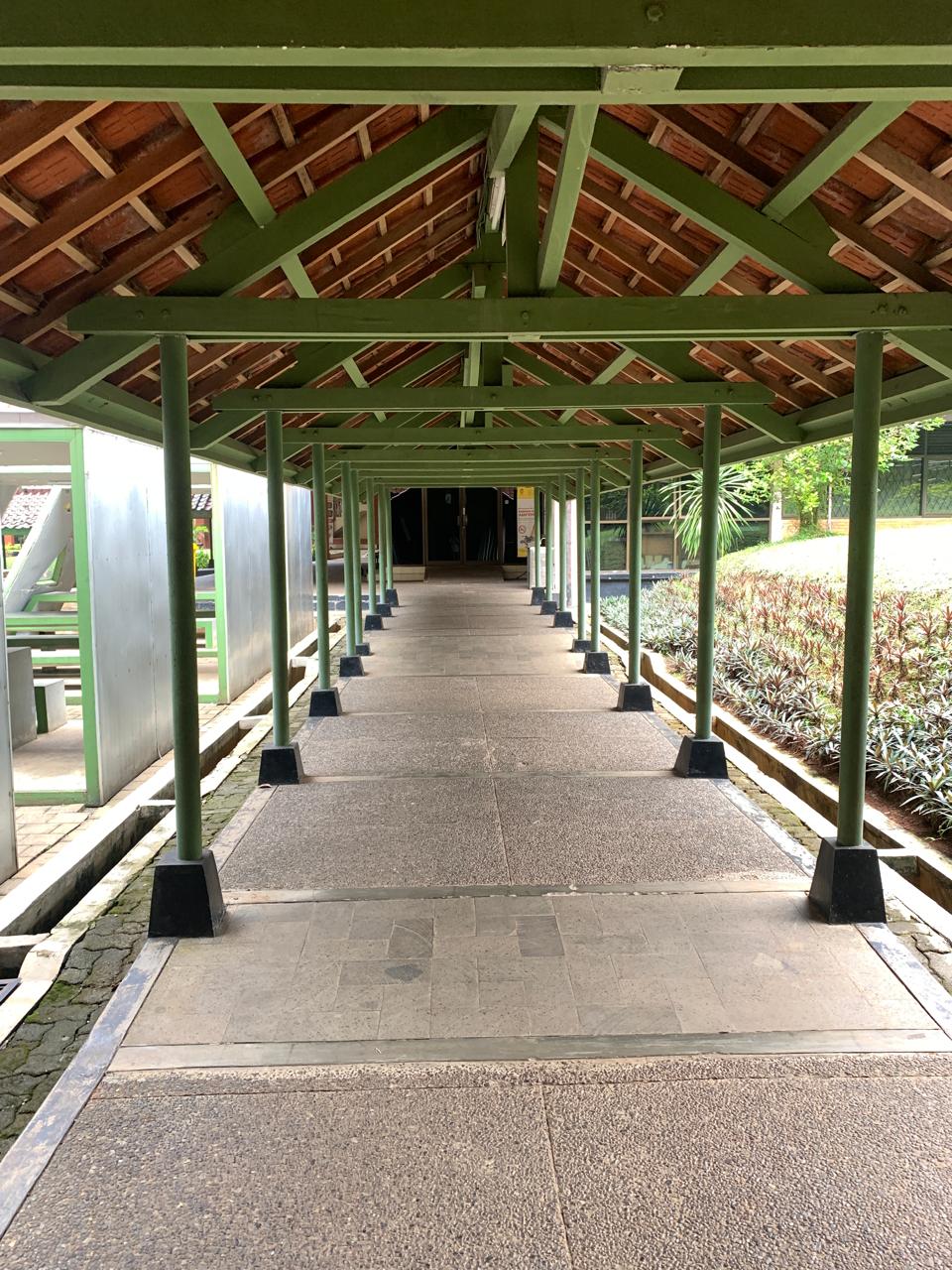
The Faculty of Social and Political Sciences, University of Indonesia (FISIP UI) provides various academic and non-academic supporting facilities, ranging from representative classrooms, libraries, and laboratories, to discussion rooms and open areas. All these facilities are designed to create a comfortable, inclusive learning environment that supports the optimal development of students’ potential.
Classrooms
Classrooms for the Political Science Education Program at FISIP UI are equipped with modern learning facilities, such as projectors, audio systems, and internet access that support interactive and discussion-based teaching and learning processes. The layout is designed to be flexible and comfortable, allowing for dynamic idea exchange between lecturers and students. These facilities help students develop critical thinking, analytical skills, and communication skills essential in political science studies.
Auditorium
The FISIP UI Auditorium is one of the main facilities used for various academic and student activities, such as seminars, public lectures, public discussions, training, and organizational events. With adequate capacity and supporting facilities such as a good audio-visual system, this room becomes an important space for interaction between students, lecturers, and guest speakers. The presence of the auditorium encourages students to actively participate in scientific forums and campus activities, and broaden their horizons beyond the classroom.
Miriam Budiardjo Resource Center (MBRC)
The Miriam Budiardjo Resource Center (MBRC) is a modern learning resource center at the Faculty of Social and Political Sciences, University of Indonesia (FISIP UI), named in honor of Prof. Dr. (H.C.) Miriam Budiardjo, one of the faculty’s founders and a key figure in Indonesian political science. MBRC is designed as an open space that supports academic activities and students’ intellectual development.
MBRC plays an important role in supporting the learning process of FISIP UI students by providing resources and an environment that supports academic development. This facility helps students access information, complete assignments, and develop the academic skills needed for success in their studies.
Instagram: MBRC FISIP UI
Discussion Rooms
Discussion rooms are designed as conducive places for exchanging ideas, formulating research strategies, and developing critical thinking. These facilities serve as collaborative spaces for students to delve into Criminology issues, hold small forums, and discuss study results with lecturers or fellow students. The existence of these rooms supports the creation of an active, reflective, and open academic culture, which is very important in criminology education.
Suwarniyati Sartomo Room
Located on the 2nd floor of Nusantara I Building, Department of Criminology, FISIP UI, this room serves as a comfortable reading and discussion space for the academic community. Equipped with various references, this facility is where students and lecturers access literature, discuss, and exchange ideas in a conducive atmosphere.
In addition to supporting the teaching and learning process, this room is also useful for completing assignments, preparing presentations, and conducting research in the field of criminology. Its presence is expected to encourage the development of insights, strengthen academic skills, and foster a collaborative learning culture within the Department of Criminology.
Open Spaces
FISIP UI has a number of comfortable and green open spaces, such as Democracy Park and open areas around building J, which are often used by Criminology Department students for discussions, dialogues, and study forums. These facilities not only support out-of-class learning activities but also encourage the growth of critical thinking, social engagement, and collaboration among students—important values in Criminology education.
Crystal of Knowledge Library
The University of Indonesia provides library facilities that operate from 08:30 AM to 07:00 PM WIB on Monday – Friday and from 08:30 AM to 04:00 PM WIB on Saturday. Inside the library, there are common study areas and quieter individual study areas.
Visit Facilities: Crystal of Knowledge
FISIP UI Balsem Canteen
The canteen, also known as Kantin Balik Semak, Takor, or Next Level of Balsem, is a culinary and socialization icon within the FISIP University of Indonesia environment. Originally established in 1990 among bushes and trees, it has since evolved into a more organized and modern space.
Balsem Canteen offers a hygienic and digital concept: self-service dining, automatic dishwashing, cashless payments, and health certification for all vendors.
Beyond being a dining spot, this canteen is the heart of student activity—a place for discussions, breaks, and gathering in a relaxed atmosphere.
Transportation
The University of Indonesia (UI) provides free intra-campus transportation facilities in the form of Yellow Buses. These buses operate from Monday-Friday from 07:00 AM to 10:00 PM WIB and on Saturday from 07:00 AM to 05:00 PM WIB. UI Yellow Buses have two routes:
Yellow Bus Route (Red)
Dormitory Stop – Gerbatama Stop — UI Station Stop — Faculty of Law (FH) Stop — UI Mosque Stop — Pondok Cina Stop — Faculty of Nursing (FIK) Stop — Faculty of Mathematics and Natural Sciences (FMIPA) Stop — Polytechnic (Poltek) Stop — Faculty of Engineering (FT) Stop — Faculty of Economics and Business (FEB) Stop — Faculty of Humanities (FIB) Stop — Faculty of Social and Political Sciences (FISIP) Stop — Back to Dormitory.
Yellow Bus Route (Blue)
Dormitory Stop — Gerbatama Stop — UI Station Stop — Faculty of Psychology Stop — Faculty of Social and Political Sciences (FISIP) Stop — Faculty of Humanities (FIB) Stop — Faculty of Economics and Business (FEB) Stop — Faculty of Engineering (FT) Stop — Polytechnic (Poltek) Stop — Faculty of Mathematics and Natural Sciences (FMIPA) Stop — Faculty of Nursing (FIK) Stop — Pondok Cina Stop — UI Mosque Stop — Back to Dormitory.

Students can access public transportation using e-money cards, which can be purchased and topped up at the nearest minimarket, with an initial purchase and top-up ranging around Rp50,000.
E-money cards can be used to pay for several public transportation facilities, such as Commuter Line (fares ranging from Rp3,000-Rp13,500 per trip), TransJakarta for Rp3,500, and MRT for Rp3,000 – Rp14,000 per one-way trip. The UI Depok complex is passed by two commuter line stations, namely:
- University of Indonesia (UI) Station
- Pondok Cina Station
Students can also use online transportation applications. Additionally, there are motorcycle taxi services available within the University of Indonesia Campus for approximately Rp10,000.
Health
The University of Indonesia has several health facilities for both the academic community and the general public, namely:
University of Indonesia Hospital (RSUI)
Address: Jl. Prof. DR. Bahder Djohan, Pondok Cina, Beji District, Depok City, West Java 16424
Phone: (021) 50829292
WhatsApp: +628119113913
Makara UI Satellite Clinic
Address: Lingkar Utara, Kukusan, Beji, Depok City, West Java 16425
Phone: (021) 78881017
WhatsApp: +6289602912060
Visit: rs.ui.ac.id
UI Sports Facilities (SOR UI)
Sports activities as extracurriculars are a tangible form of student actualization in non-academic fields. Therefore, the University of Indonesia facilitates every extracurricular activity that encourages student potential and achievement with a spirit of positive mental attitude, competitiveness, and sportsmanship.
The sports facilities currently owned by UI are:
Stadium
- Football Field
- Triple Jump
- Athletics
Indoor/Gymnasium
- Badminton Court
- Volleyball Court
Outdoor
- Hockey Field
- Tennis Court (3 lines)
- Basketball Court (4 lines)
- Volleyball Court (3 lines)
Visit: ui.ac.id/sor-ui
Sport Center by Emaara
Sport Center by Emaara is a premium sports and recreation center that supports a healthy lifestyle and athletic achievement, for both beginners and professionals. Equipped with modern facilities and certified coaches, visitors can enjoy various sports such as golf, swimming, tennis, and even archery. Through Emaara’s exclusive point system, every service becomes more valuable and flexible.
Visit: sportcenter.emaara.id
UI Dormitory
UI Dormitory is located within the University of Indonesia complex, Depok. Its facilities include bedrooms, study rooms, a canteen, sports areas, and internet access. This dormitory is intended for students from various regions and abroad, with an environment that supports academic and social activities.
Visit: residence.ui.ac.id
Ukhuwah Islamiyah Mosque (UI)
This is the main mosque in the University of Indonesia Campus area, Depok. This mosque is widely known by the academic community and the general public as a center for Islamic religious activities within the UI environment. Its magnificent and open architecture makes this mosque not only a place of worship but also a center for studies, discussions, and socio-religious activities.
The distance and access from FISIP UI to UI Mosque is approximately 500 to 600 meters and can be covered in 5 to 10 minutes by walking through the campus’s shady and comfortable pedestrian paths. Besides walking, students and lecturers can also use campus bicycles, personal bicycles, or the yellow bus (Bikun) that circulates around the UI campus for free.
Within the FISIP UI environment itself, there is Mushallah Al-Hikmah located near the lecture halls of Building H. This musholla serves as a daily prayer place for students, lecturers, and educational staff at FISIP. Although not as large as the UI Mosque, this musholla is actively used for congregational prayers, studies, and small-scale religious activities.
Instagram masjid.ui.id

Disability Facilities
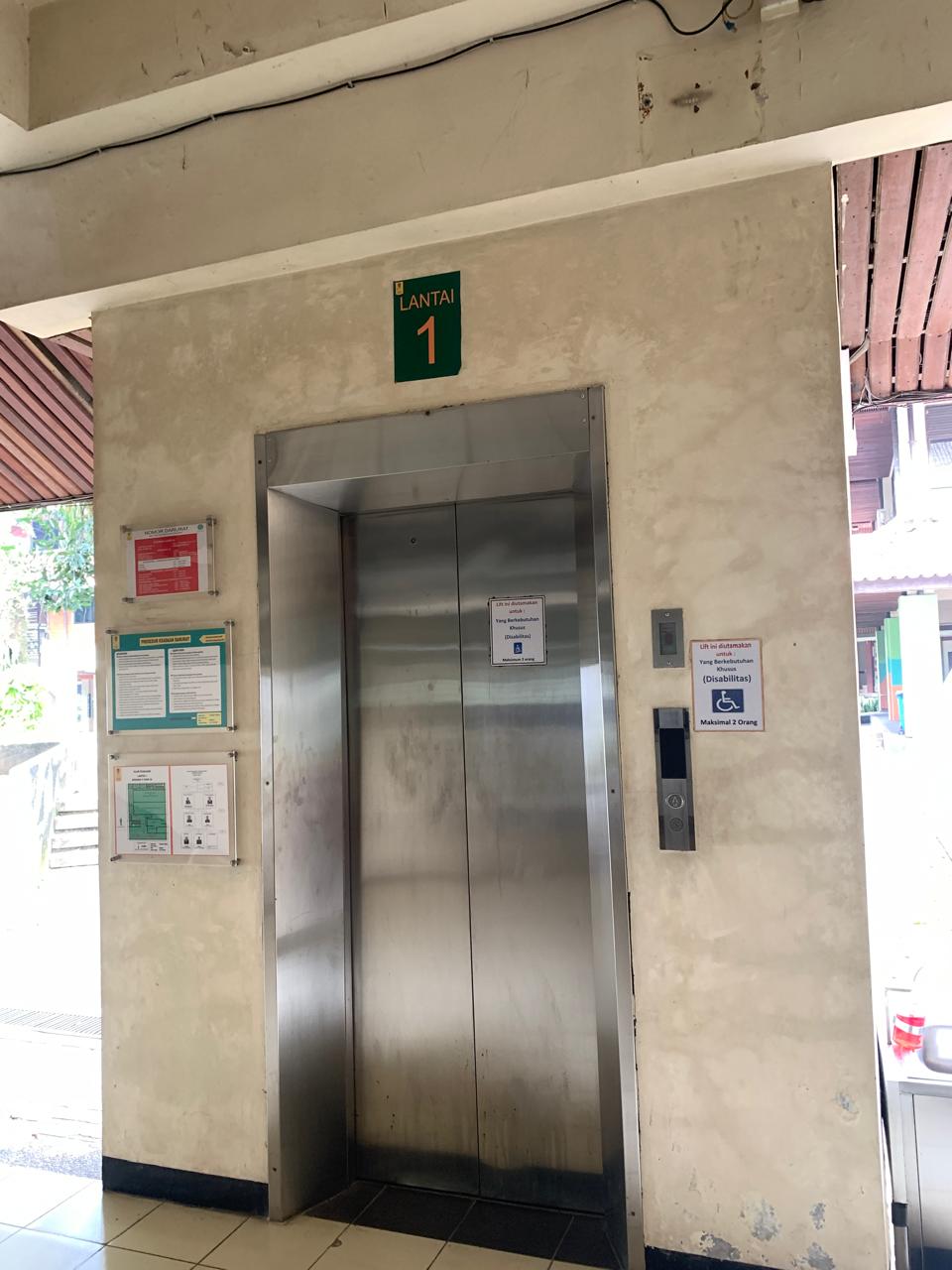
The provision and development of facilities by the University of Indonesia in general, and the Department of Political Science in particular, consider access for people with disabilities. This is regulated in UI Rector’s Decree Number 2816 of 2017.
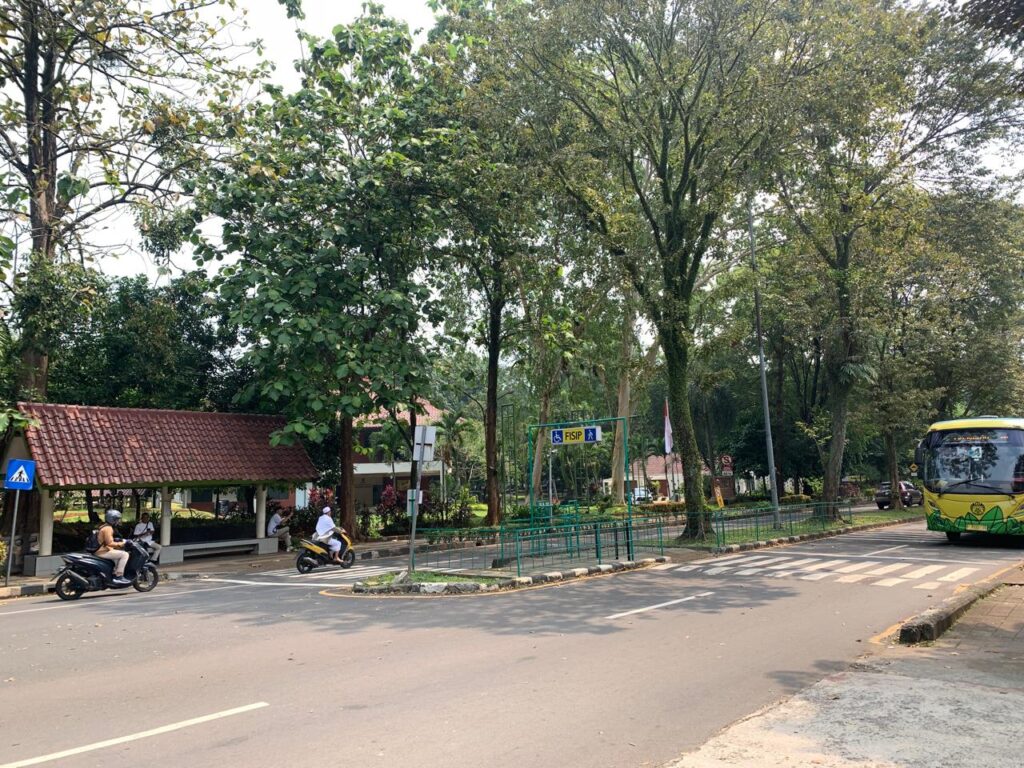
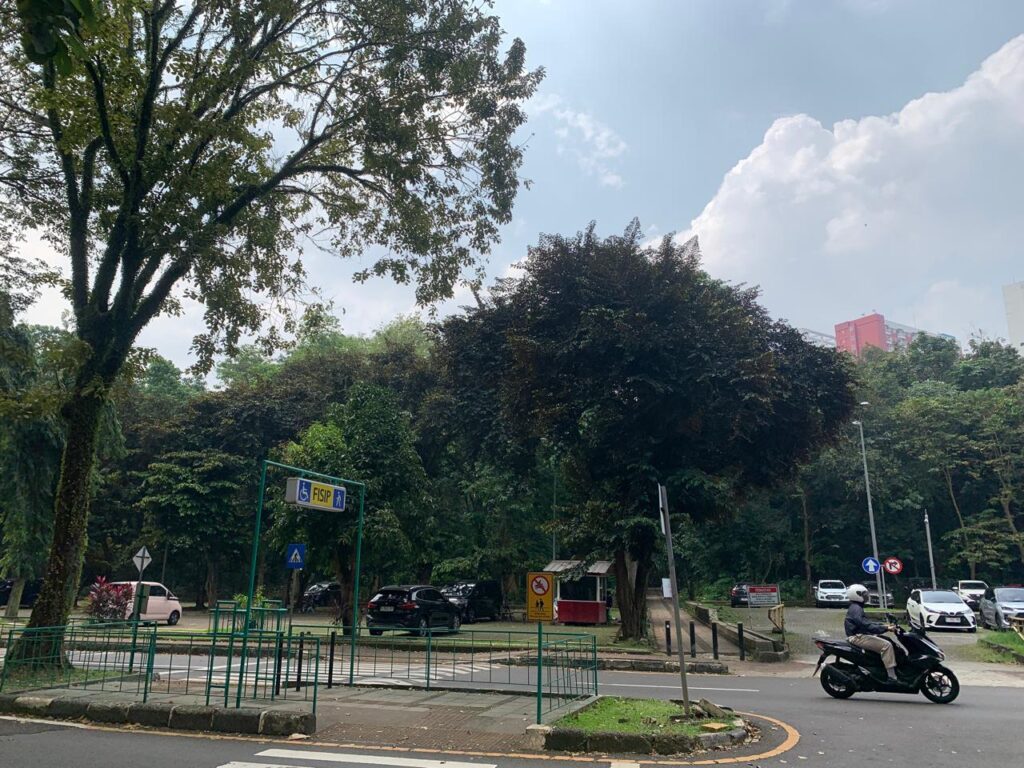
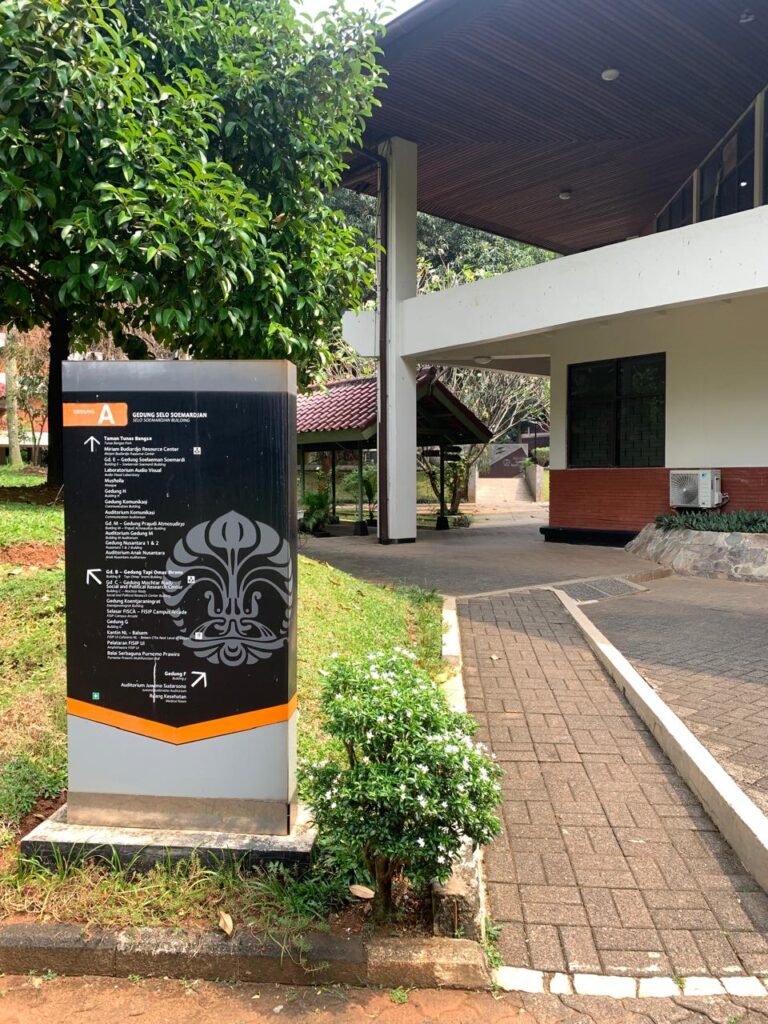
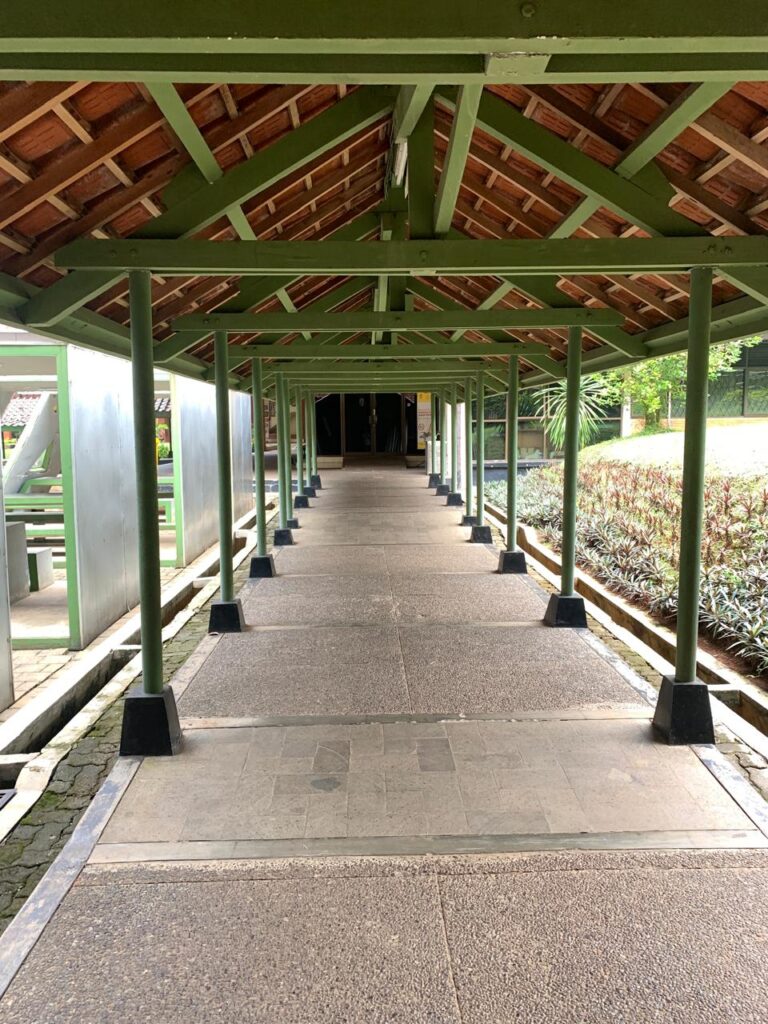
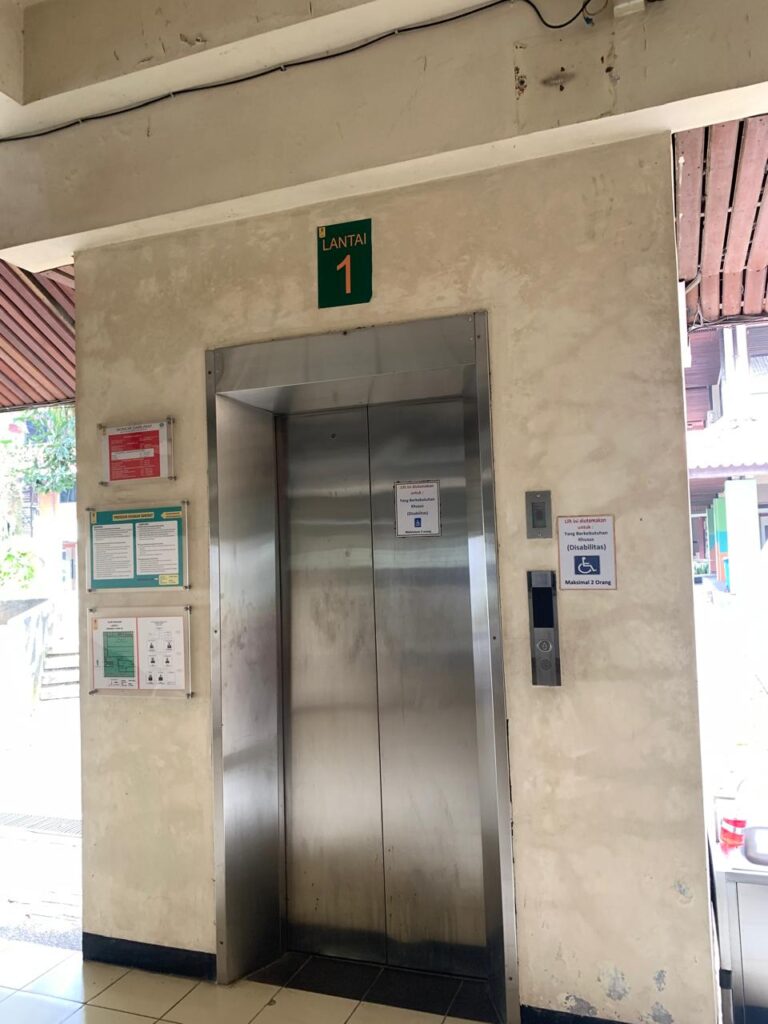
See UI’s commitment to equality and comprehensive support for people with disabilities, including accessibility facilities and special services.